What it is
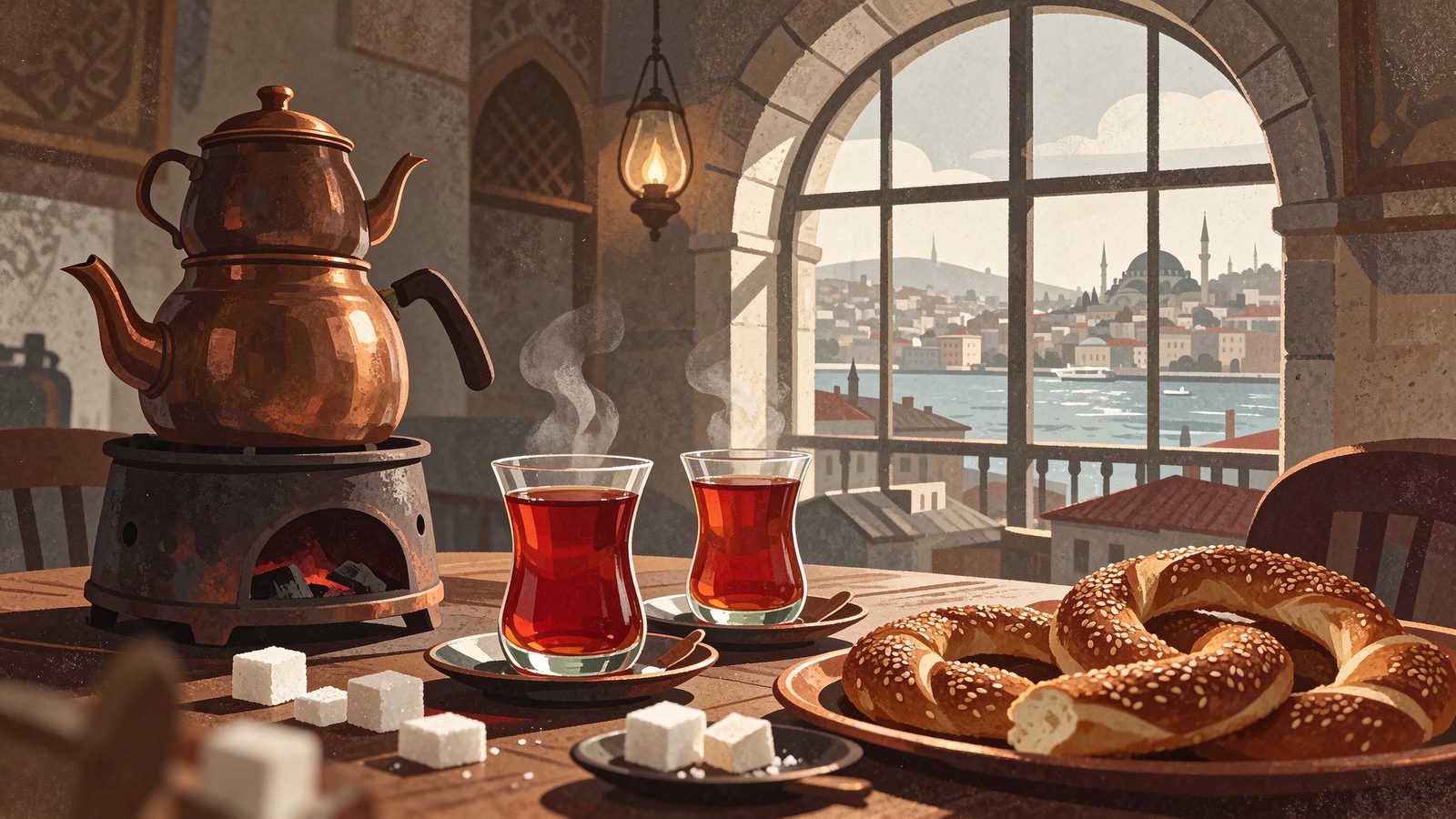
A çaydanlık is a pair of stacked teapots used for Turkish tea. The larger lower pot boils water. The smaller upper pot holds tea leaves and a little hot water, and is heated by steam and heat from the lower pot, producing a strong tea concentrate. To serve, the concentrate is poured first and then diluted with hot water from the lower pot according to taste.
It is not simply a teapot plus a kettle, and it is not a pot for boiling leaves directly in the full volume of water. The point of the two-pot system is to separate strength from cup volume: one concentrate can be diluted to different strengths for a family or for customers in a tea house.
Structure and place
Most çaydanlık are made of stainless steel, enamel or copper, and some have insulated or electrically heated bases. The lower pot has a spout, handle and heating base; the upper pot is smaller, often with a strainer or perforated base, and has its own lid. The two pots must stack securely so steam from the lower pot heats the upper one evenly.
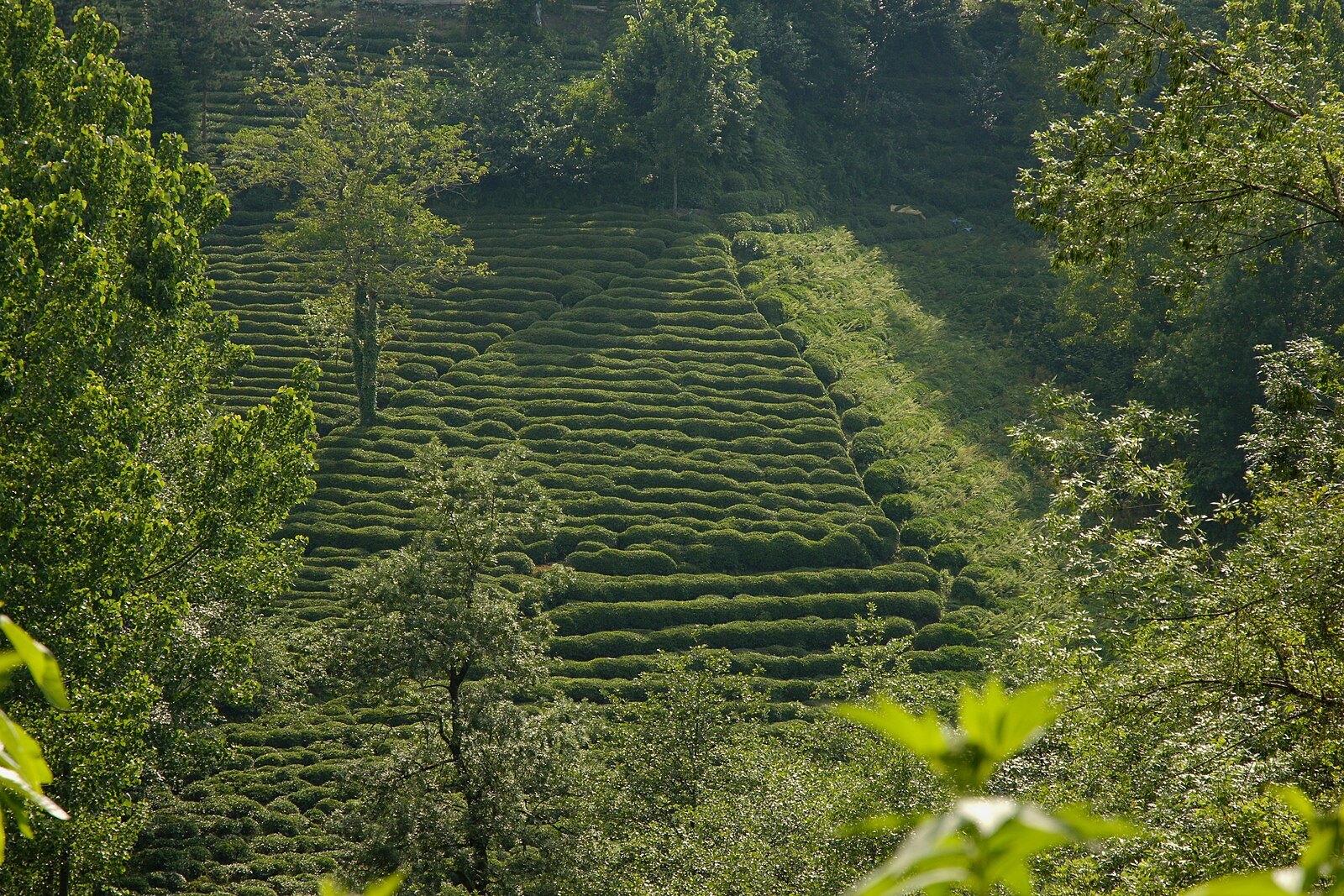
Rize, on Turkey's Black Sea coast, is the main tea-growing region. The çaydanlık is used with the narrow-waisted tulip glass known as ince belli. Tea houses, homes and workplaces use the pair repeatedly. The glass is thin and transparent, making the liquor colour visible and allowing hot tea to cool slightly at the rim.
How to use it
- Fill the lower pot with water and bring it to a boil.
- Put tea leaves in the upper pot, add a little hot water to wet them, and set the pot on the lower one.
- Keep the heat low and let the tea steep, commonly for 15–20 minutes; a longer steep gives a stronger concentrate.
- Pour concentrate from the upper pot into a glass, then dilute with hot water from the lower pot. Milk is not normally added to Turkish tea.
- Replenish water and leaves as needed. Do not let the upper pot boil dry.
Choosing one
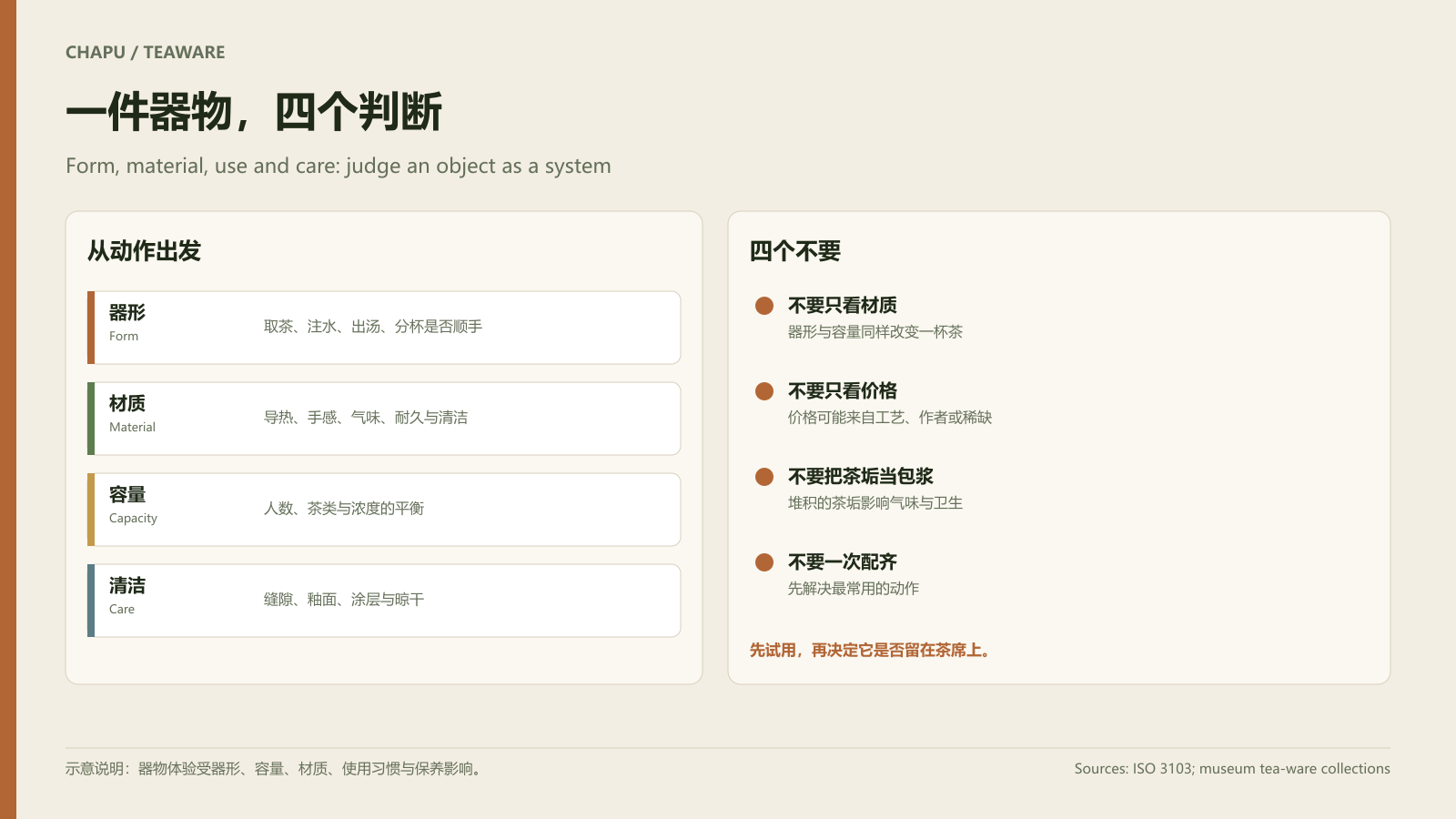
Check three things: whether the pots stack securely, whether the upper strainer is clear, and whether the lower spout pours cleanly. A 1–2 litre lower pot is enough for a household; a larger set suits frequent guests. For metal pots, inspect seams, handle insulation and lid fit. Enamel is light but chips; copper holds heat well but costs more and needs care. “Traditional copper” is not automatically better than a pot that is comfortable to use.
Common misunderstandings
- The leaves are not boiled in the lower pot. The lower pot heats water; the upper pot makes the concentrate.
- Turkish tea is normally served without milk. Sugar, a tulip glass and hot-water dilution are the common elements.
- Stronger is not automatically better. The concentrate is an ingredient; final strength depends on how much hot water is added.
- The glass shape is functional. The narrow waist gives a place to hold the hot glass and helps show the liquor colour.
Strength, sugar and refills
Turkish tea usually starts with strong tea from the top pot to one-third of the cup, then hot water from the bottom to seven-tenths; two sugar cubes are common. Strong tea is bitter, hot water opens it, sugar softens it. For a refill, drink half the cup first, then add strong tea and water in the same ratio; do not just top with hot water or it fades.
Leaf and dose
Turkish tea usually uses black tea from Rize, finely broken and fast to infuse. About one teaspoon per cup in the top pot, simmered gently for eight to ten minutes; strength follows family habit. Do not stew the same leaf all day: a second boil turns bitter. Keep the lower water hot, not rolling.
Source boundary
This page covers the çaydanlık structure and basic Turkish tea practice. Steeping time, leaf amount and water ratio vary by region, household and tea house. Rize is one production region, not a stand-in for all Turkish tea, and the vessel tells us nothing about whether a particular tea house is currently open.