What it is
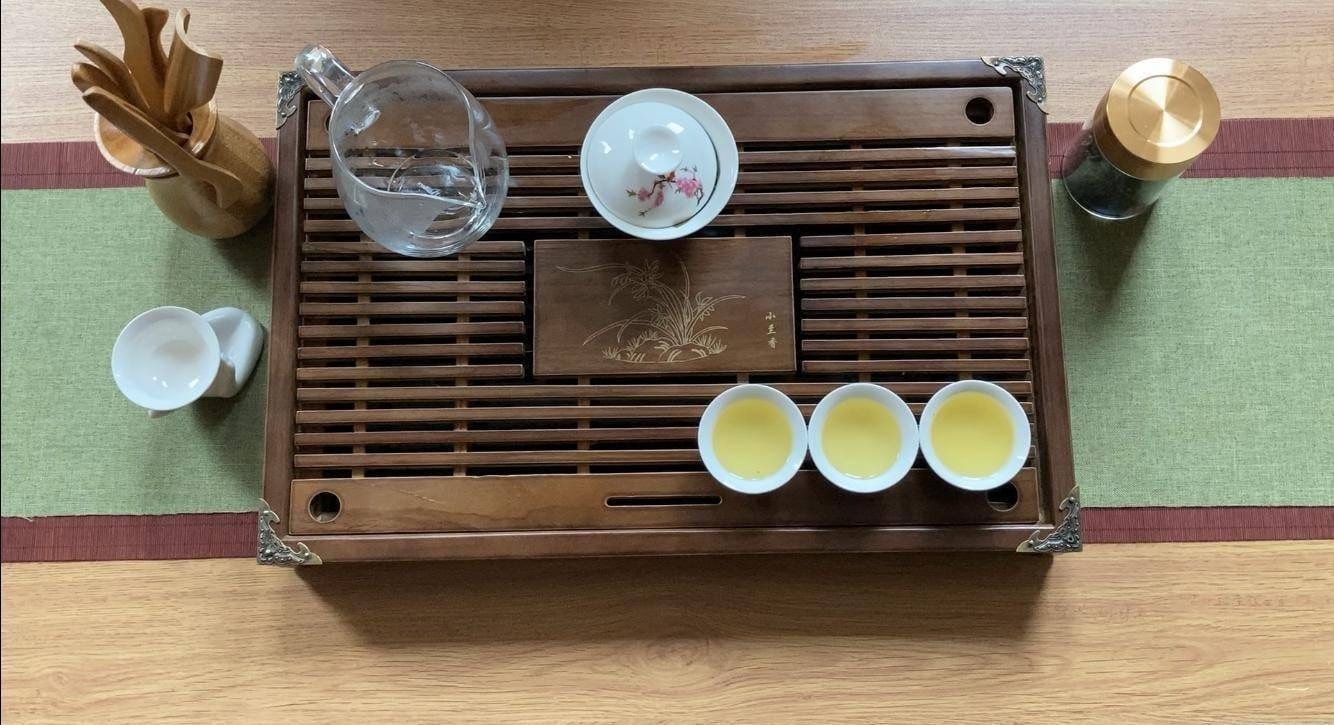
A gaiwan consists of a lid, bowl and saucer. It is a simple, flexible vessel that can be used as the main brewing vessel or drunk from directly. It is common across China, especially in gongfu tea, sensory evaluation and everyday home brewing.
Structure
- Lid: used to push leaves, smell the aroma and control the gap during decanting.
- Bowl: holds the tea; the rim usually flares to make pouring and holding easier.
- Saucer: supports the bowl, insulates the hand and catches spills.
The three parts give the gaiwan both the brewing capacity of a pot and the directness of a cup. The lid does not need to seal completely: during decanting, the lid is offset to leave a gap. A small knob, a very thin rim or a slippery saucer increases the risk of burning or dropping.
Materials
White or celadon porcelain is most common; ceramic, zisha, glass and metal also appear. Porcelain is neutral in taste and makes the liquor easy to observe, which is useful for learning and comparison. Glass shows the leaf; ceramic and zisha may retain aroma and suit a fixed tea type. Glaze, body and firing affect feel and durability; see the entries on porcelain and glazing. GB/T 3532-2022 provides a reference for domestic porcelain.
How to use
- Warm the gaiwan, add leaf and pour hot water; replace the lid.
- For the first infusion, rinse briefly or decant directly depending on the tea.
- To decant, hold the rim with thumb and middle finger, press the lid knob with the index finger, offset the lid slightly and tilt the bowl into a pitcher.
- Decant fully and return the bowl to the saucer; do not leave the leaf sitting in water.
- Clean promptly without soaking in detergent, then air-dry.
A common capacity is 100–150 ml, suitable for 5–8 g of leaf, but adjust to the tea, number of people and taste. For brewing parameters, see the tea encyclopedia guide to brewing variables; this page covers the vessel.
How to choose
For a first gaiwan, choose 100–120 ml white porcelain with a flared rim, an easy-to-press knob and a stable saucer. Check that the glaze is even, the rim smooth and the lid fits without sticking. Do not chase ultra-thin walls or expensive materials at the start; a comfortable, durable gaiwan that lets you see the liquor is more useful.
Common misconceptions
- Is a gaiwan only for green tea? No. It suits many tea types and is common in gongfu tea.
- Does white porcelain mean low-end? No. It is neutral, easy to observe and practical for tasting.
- Should the lid fit tightly? No. Too tight makes decanting difficult; too loose risks dropping the lid.
- Can you drink directly from a gaiwan? Yes, but mind the water temperature, rim and stability of the saucer.
Sources
- China National Tea Museum — Qing dynasty famille rose gaiwan with rooster motif — Museum object record describing the gaiwan form: flared or straight rim, tapered body, ring foot, lid resting inside the bowl.
- GB/T 3532-2022 Domestic porcelain — Chinese national standard for domestic porcelain classification, requirements and testing.