What it is
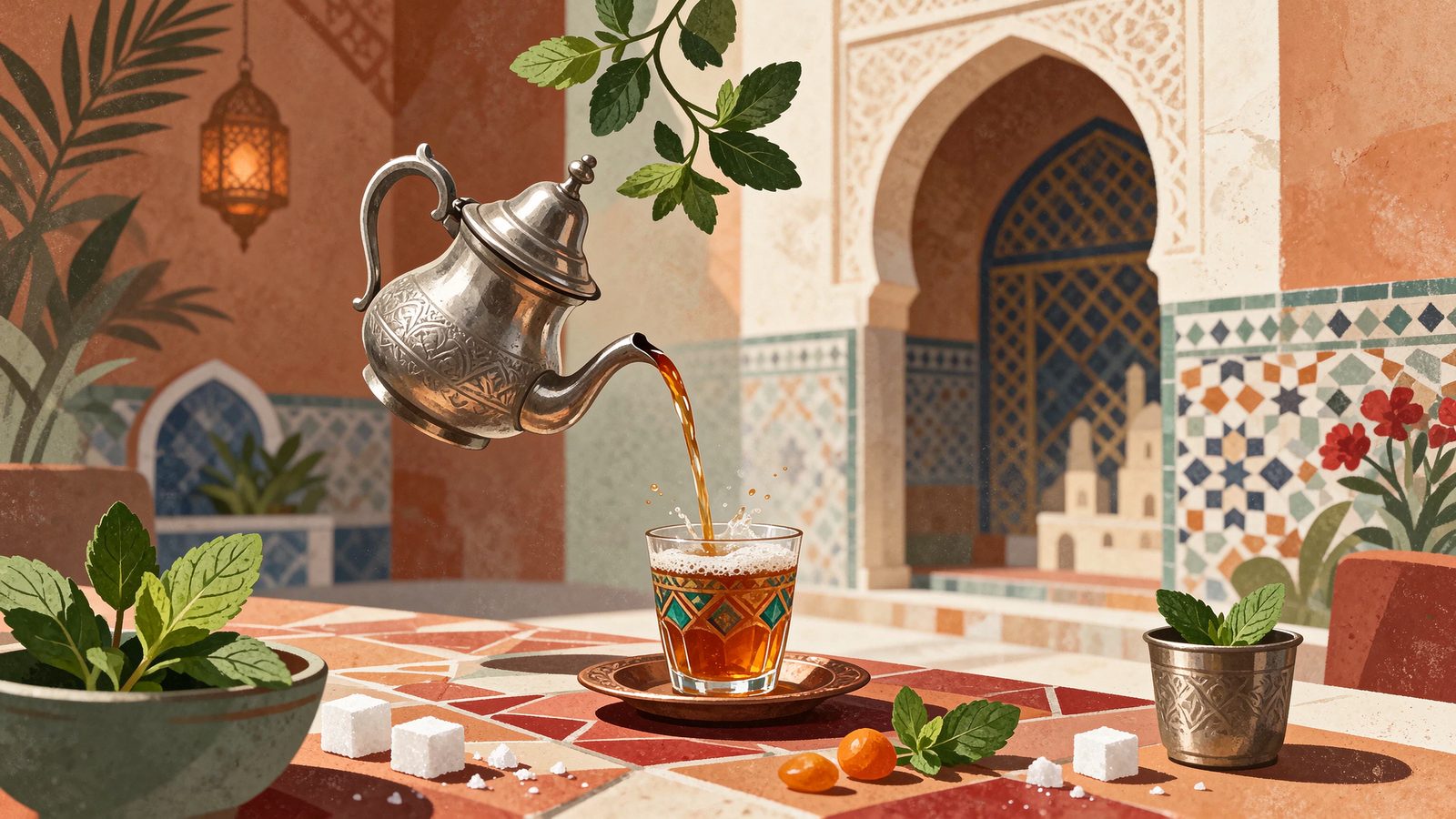
A Moroccan tea set usually consists of a metal teapot with a long curved spout, several coloured glasses and a round tray. The pot may be silver, nickel silver, brass or silver-plated, often with hammered, engraved or pierced decoration. The glasses are smaller than Chinese tasting cups and may carry gold trim or painted patterns.
The set is used for Moroccan mint tea: Chinese gunpowder green tea, fresh mint and sugar. When pouring, the pot is raised so the tea falls from a height into the glass. This aerates and mixes the tea, and turns pouring into part of the hospitality performance.
Structure and place
The pot has a long curved spout, a lid and a handle. A longer spout helps produce a steady stream; the lid and strainer determine whether leaves and mint block the flow. The small glasses keep the tea hot and show its colour. The tray catches spills and holds the set on one serving surface.
The modern Moroccan set is tied to Mediterranean trade. In the late nineteenth century, Moroccan merchants bought metal tea services from British suppliers; local craftsmen then copied and adapted them. Moroccan silver and copper work added engraved and geometric decoration. Today a household may use a plain metal pot with everyday glasses, while weddings and festivals may use a full silver service.
How to use it
- Put gunpowder green tea in the pot, add a little hot water to wet the leaves, and pour off the first infusion.
- Return the strong first infusion to the pot, add water and sugar, and heat gently. Do not let it boil hard for a long time.
- Add a generous handful of fresh mint and let it steep with the lid on for a few minutes.
- Raise the pot when pouring so the tea falls from a height. Pour out and return the tea to the pot once or twice to mix.
- Hospitality often involves three glasses, moving from strong to light. Daily drinking does not require the full ritual.
Choosing and care
For daily use, check that the spout is clear, the lid is secure and the handle does not get too hot. Silver and silver-plated pots should not hold acidic liquid for long; wash and dry them promptly. Do not subject the glasses to sudden temperature change. The tray should hold pot and glasses steadily without a slippery edge. Coloured glass and gold trim wear over time; a household does not need a full silver set.
Common misunderstandings
- There is more than one kind of Moroccan set. Everyday metal pots and glasses differ from festival silver services.
- High pouring is not only display. It helps mix and cool the tea, but the pot need not be raised excessively.
- Mint tea is not black tea. The base is usually gunpowder green tea, not British-style black tea.
- Sweetness is not a fixed test. Sugar varies by household, region and occasion; “very sweet” is not the only authentic style.
Three pours
Moroccan hospitality tea is often poured three times: the first strong, the second most balanced, the third lighter, marking levels of welcome. Pour from a height each time to aerate and create foam, then return the pot to the tray. Use fresh mint and plenty of it; sugar follows family habit, not a fixed recipe.
Source boundary
This page covers the set, its use and basic historical context. Silver purity, craft and date require physical examination. Sugar, mint varieties and pouring styles vary widely between households and regions, so one template cannot represent all Moroccan tea practice.