What it is
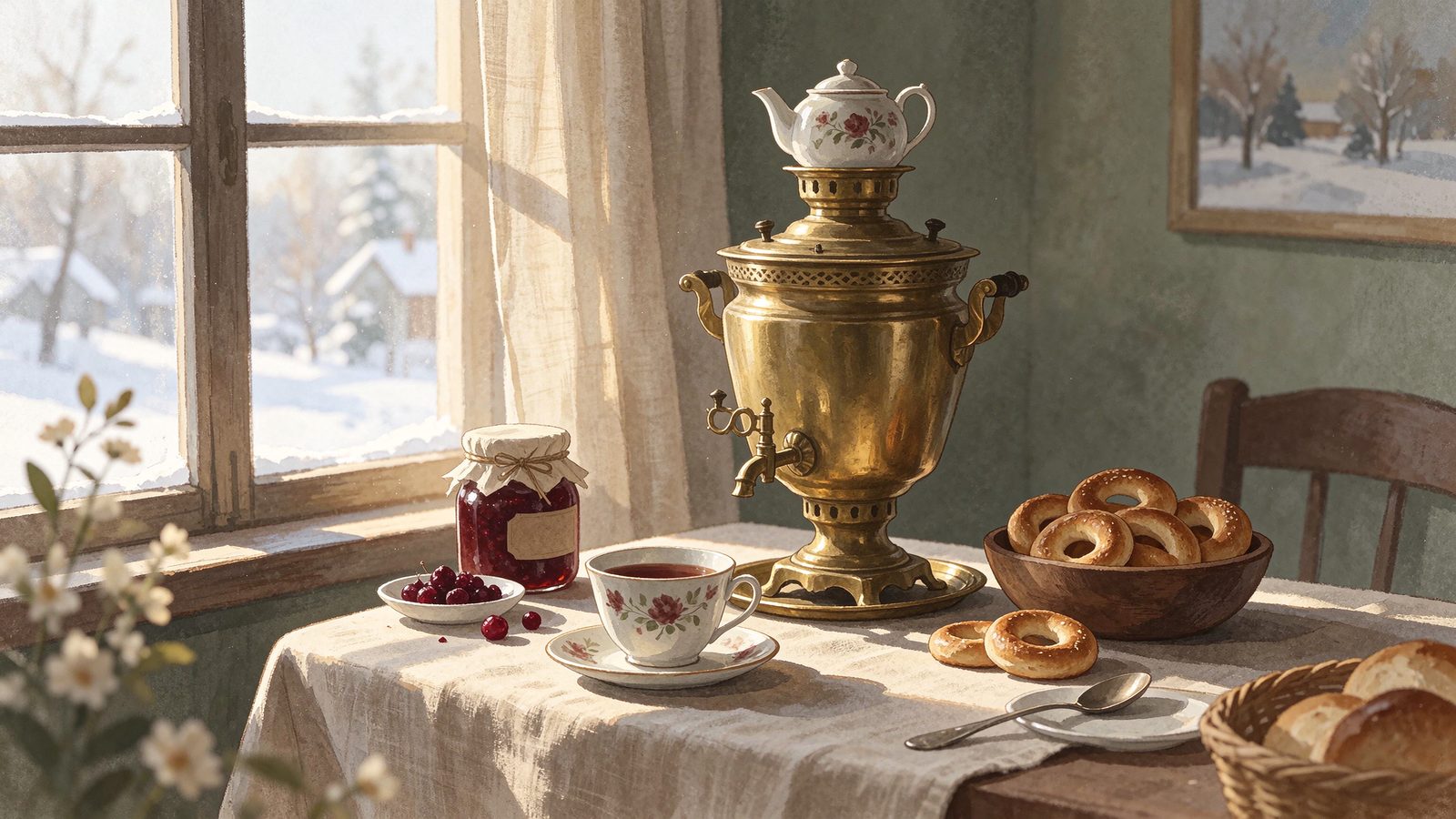
A samovar is a metal vessel used in Russia to heat and keep water hot. Its name is often explained as “self-boiling,” because a heating tube runs through the body: charcoal or an electric element is placed inside, and the surrounding water is heated. A samovar usually has a tap, a lid and a chimney-like structure, and can keep water hot for a long time.
A samovar is not a teapot. Russian households commonly brew a strong tea concentrate in a small teapot, then pour the concentrate into a cup and dilute it with hot water from the samovar. The samovar manages water and heat; the teapot manages the tea.
Structure and place
A samovar consists of an outer shell, internal heating tube, water chamber, tap and base. Traditional samovars were made of brass, copper or silver, sometimes with a tin-lined interior. Tula and the Urals became well-known production centres in the nineteenth century. Tula is a production tradition, not a guarantee that every samovar comes from there.
Samovars appeared in the Urals in the first half of the eighteenth century and were first used in noble households. As tea became cheaper in the nineteenth century, they spread to other classes. The samovar became a domestic centre for hospitality: guests sat around it, the water stayed hot, and the table held a teapot, glass holders, jam and sugar.
How to use it
- Fill the samovar with water, then light the heating tube or switch on the electric element. Never heat it without water.
- Put black tea in a small teapot and brew a strong concentrate with hot water from the samovar. Let it steep for a few minutes.
- Pour the concentrate into a cup first, then add hot water from the samovar tap to dilute it.
- A metal glass holder (podstakannik) may be used to protect the hand. Sugar, lemon and jam are added to taste.
- Empty the remaining water and dry the tap and interior. A charcoal samovar must cool completely before storage.
Choosing and care
For household use, consider capacity, heating method and ease of cleaning. An electric samovar is safer and easier to control than a charcoal one; a traditional charcoal samovar suits outdoor use or display but needs ventilation and fire care. Check the tap for leaks, the heating element for damage and the interior for rust. Brass or copper exteriors oxidise and need polishing; do not clean the interior with strong acid. An antique samovar may have lead solder or other damage and should not automatically be used for drinking water.
Common misunderstandings
- A samovar is not a teapot. It heats and holds water; the concentrate is brewed separately.
- “Tula samovar” is not a quality guarantee. Origin is a tradition; condition and construction matter more.
- Samovars are not necessarily charcoal-fired. Electric models are common; charcoal is one method among several.
- Older is not always safer. Old vessels may have rust, solder and seal problems.
Fuel, electricity and placement
Traditional samovars burn charcoal or kerosene and need ventilation, a flue and fire care; electric models are simpler, with water-level and wiring checks. Place the samovar at the end of the table or on a side table, near cup height so pouring does not require a high lift. The strong-tea pot sits on top; do not stew it over direct heat or the liquor turns bitter.
Water level and order
Fill the lower pot to seven or eight tenths, leaving room to boil; the top pot holds strong tea and should not be full or it overflows. Heat the lower water first, then brew the top leaf and keep the heat low. Pour strong tea first, then water, adjusting by the cup.
Source boundary
This page covers the samovar's structure, basic use and historical context. Material, date and safety require physical examination. Tea ratios vary between regions, households and restaurants, so one method cannot stand for all Russian practice.