A bowl without a handle
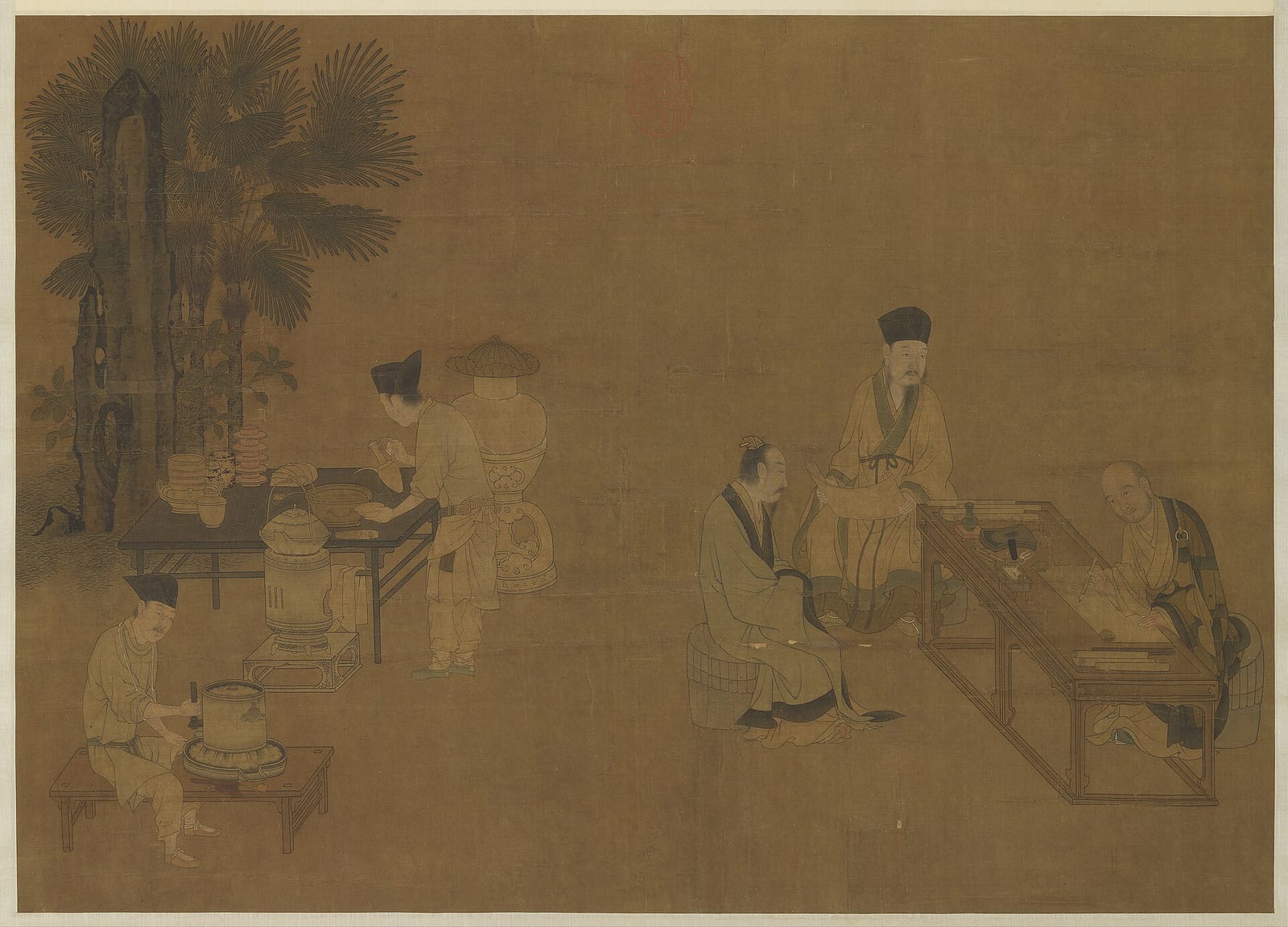
A tea bowl is the least mediated vessel in tea. It has no handle, no spout and no narrow chimney to concentrate aroma. Leaf, water and hand meet at one open rim. In Song dynasty whisked tea, powdered tea went directly into the bowl and was beaten with a bamboo whisk until foam formed. With loose-leaf brewing, the bowl moved toward tasting and the tea table rather than serving as the only brewing vessel.
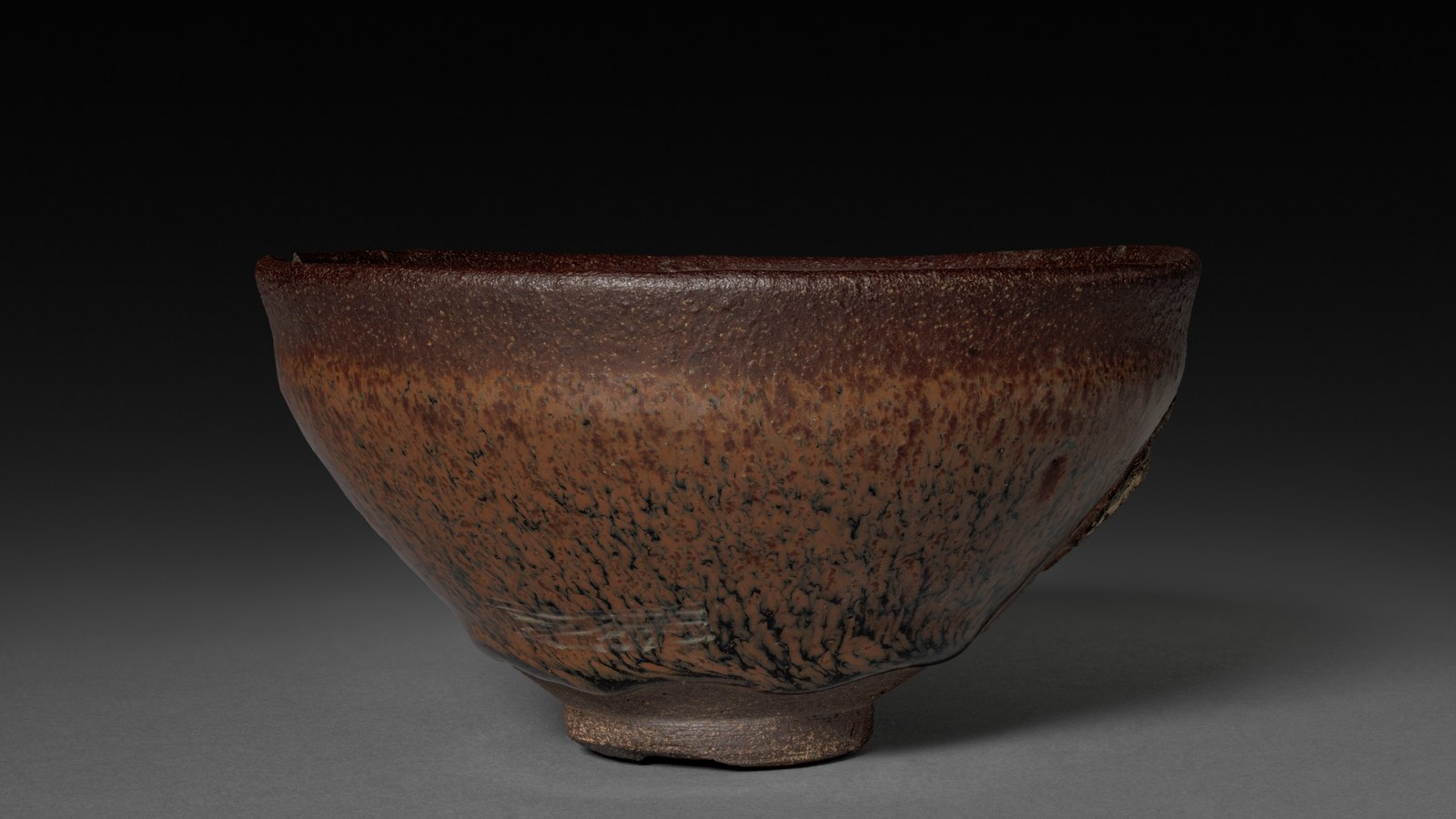
At the Jian kilns around Jianyang in northern Fujian, Song potters combined local iron-rich clay with a dark glaze. The Cleveland Museum of Art's bowl (1942.128) is about 10.8 cm across and 5.8 cm high, made of stoneware. Its glaze runs from the rim and breaks into dense brown and black streaks over the body.
Where hare's fur comes from
Hare's fur is not painted on. Iron oxides in the glaze crystallise and flow during firing, leaving fine parallel streaks. Temperature, kiln atmosphere, glaze thickness and cooling all affect the result, so even a repeated recipe does not produce identical bowls. Jian ware also includes oil-spot and partridge-feather effects; these are related but not interchangeable labels for one technique.
The dark glaze had a practical role in Song tea. After whisking, the surface of the tea carried a pale foam, and a dark ground made that foam easier to read. Thick glaze and a substantial body also helped hold heat. Because iron-rich glaze tended to run away from the rim, the edge was often left bare; later owners sometimes wrapped it in gold, silver or copper, protecting the lip and changing the object's visual character.
From Jianyang to Japan
Jian bowls entered Japan in quantity during the twelfth and thirteenth centuries. Zen monks who studied in Chinese monasteries returned with both the practice of whisked tea and dark bowls that the Japanese called temmoku. Japanese tea ceremony gave such bowls a formal role, attending to glaze, weight, rim and the feel of the whisk against the interior. The Smithsonian object text notes that dark-bodied Jian bowls first reached Japan through Zen monks and later became an important type of matcha bowl.
Temmoku takes its name from Tianmu Mountain in Zhejiang. It describes a reception history in Japan, not proof that every Jian bowl passed through a monastery or a tea ceremony. Jian ware includes ordinary kiln production as well as selected tribute pieces; the intact bowls in museums are the small fraction that survived.
Using one today
For everyday use, check the rim for smoothness, the foot for stability and the wall for heat at the lip. A dark glaze flatters pale liquor, but it does not make every tea taste better. Green and white teas may be easier to read in a pale-lined bowl, while oolong and dark tea can suit a thicker, heat-retaining body.
Wash with warm water and a soft cloth; avoid steel wool and strongly alkaline cleaners. Older bowls may have crazing or earth stains and should not be soaked for long periods. If the rim has a metal band, wipe around the seam rather than across it. A tea bowl is more useful as a working vessel than as an object kept permanently behind glass.