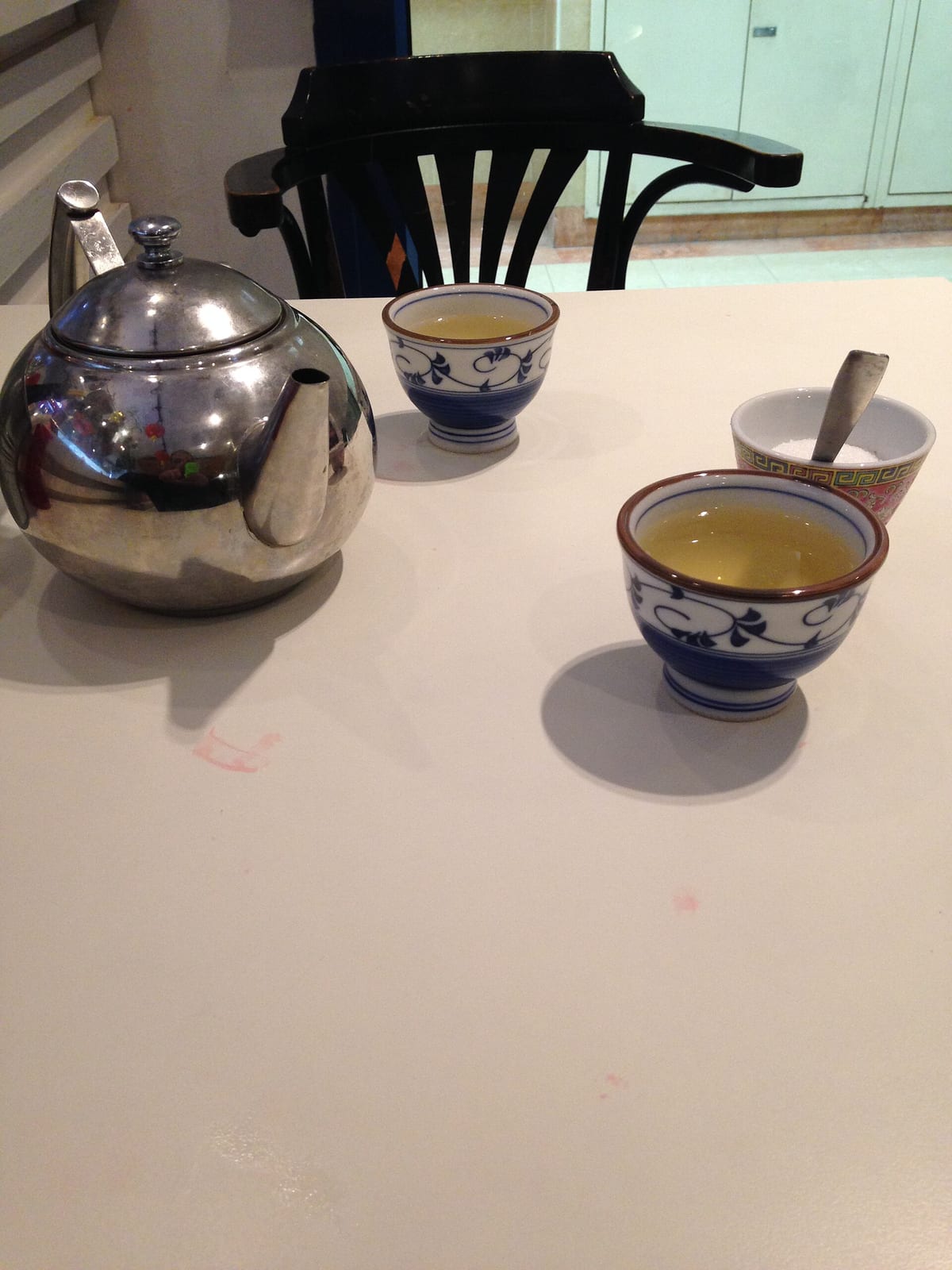
Shape
A tasting cup usually has a flared rim for drinking, a body that narrows to concentrate aroma, and a wall thickness that affects feel and cooling. Small cups suit gongfu-style serving; larger cups suit everyday drinking. The rim should be smooth, the foot stable, and the body free of sharp edges or glaze defects.
Material
White porcelain shows the liquor colour; celadon and ceramic offer different hand feel; glass shows both liquor and leaf. Porcelain is neutral and does not retain aroma, which makes it useful for comparing teas. Ceramic may retain aroma and suits a fixed tea type; glass cools faster. Porcelain cups can be checked against GB/T 3532-2022.
Use
Tasting cups are usually used with a pitcher: decant into the pitcher, then divide among the cups. A thin rim cools faster and suits hot liquor; a thicker wall holds heat but may feel hotter at the lip. Look at the colour and aroma before tasting, then sip carefully to avoid burning.
How to choose
Choose a smooth rim, stable foot and a capacity suited to the tea you drink. Gongfu tasting cups are commonly 30–60 ml; everyday cups can be larger. White porcelain is the most versatile; glass or a white interior helps with colour. Do not choose only by pattern or shape; comfort and a clean rim matter more.
Common misconceptions
- Is a larger cup always better? No. Large cups suit everyday drinking; small cups suit serving and tasting.
- Is white porcelain low-end? No. It is neutral, easy to observe and commonly used in tea evaluation.
- Is a thinner wall always better? No. Thin walls cool faster; thick walls hold heat. Each suits different uses.
- Can every cup take boiling water? No. Check heat resistance and food-contact safety.
Sources
- China National Tea Museum — tea cup collection — Museum collection page with tea cups, bowls and cup stands.
- GB/T 3532-2022 Domestic porcelain — Chinese national standard for domestic porcelain classification, requirements and testing.
This page is an AI-edited translation based on the reviewed Chinese source. It is not a human-expert endorsement.