What it is
An English bone china tea set is a group of tea wares made from bone china: teapot, teacups, saucers, milk jug, sugar bowl and sometimes a strainer or tray. Bone ash is added to the body, and the fired result is white, translucent and relatively light. That does not make it unbreakable.
Bone china is not the only British tea ware, and “thinner” does not automatically mean “better.” Its quality comes from consistency of body, forming, firing and decoration. For daily use, the pour, rim and handle matter as much as the material story.
Structure and history
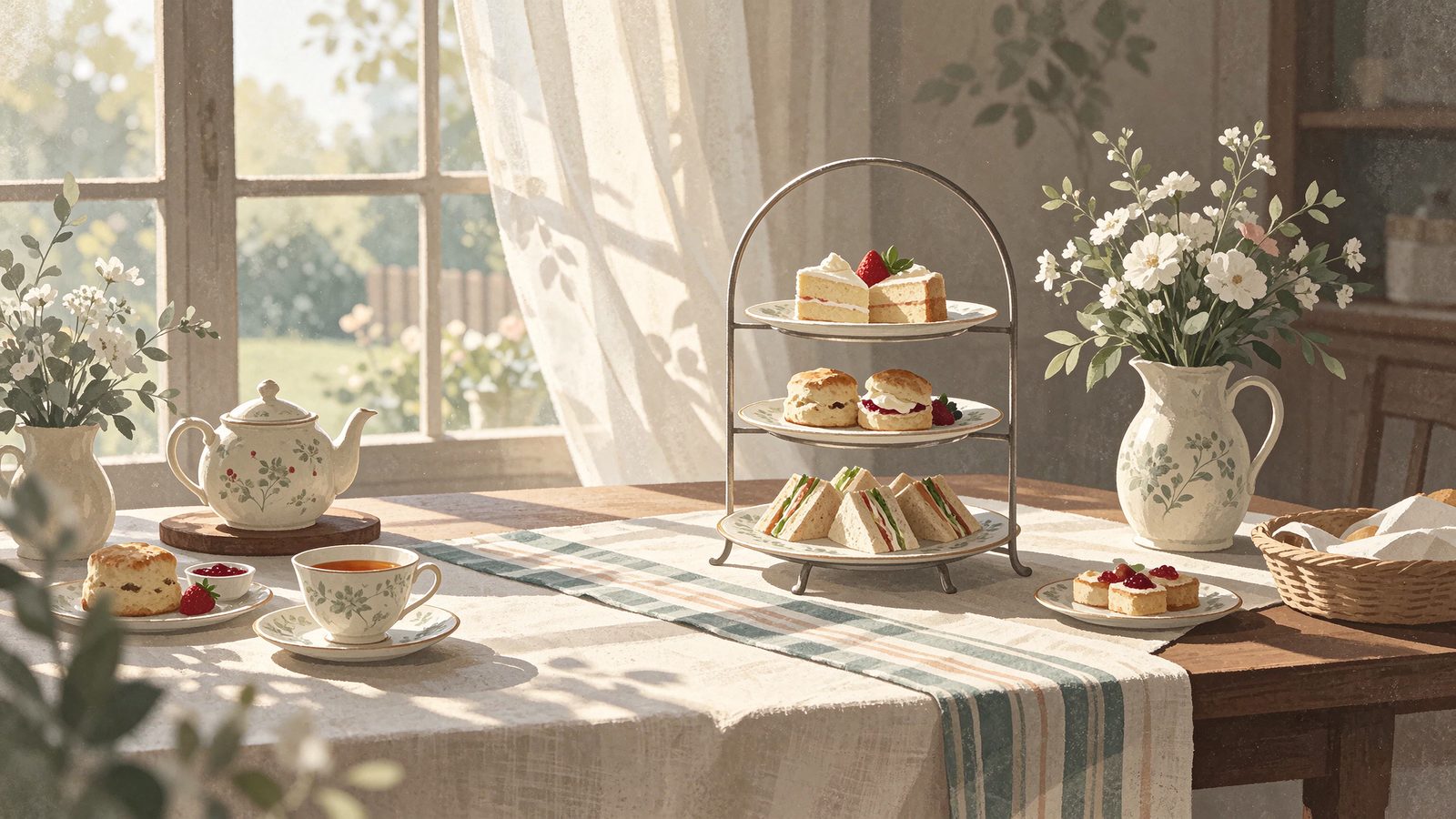
A full set usually includes a teapot, cups, saucers, a milk jug and a sugar bowl, sometimes with a strainer and tray. The teapot steeps, the jug holds milk, the sugar bowl holds sugar, and the saucer supports the cup and gives the spoon a place. Bone china commonly contains kaolin, china stone and a substantial proportion of calcined bone ash. Spode stabilised a commercial formula in the late eighteenth century, and bone china was being marketed around 1800.
British tea wares and tea consumption developed together. Tea entered court and coffee-house circles in the seventeenth century; sugar and tea became cheaper in the eighteenth; Indian and Ceylon tea reached Britain in volume in the nineteenth. Afternoon tea and domestic tea settings took shape in this context. The Staffordshire pottery district produced large quantities of tea ware.
How to use it
- Warm the pot, add leaves and pour hot water according to tea type and number of drinkers.
- Black tea is commonly steeped for 2–4 minutes with boiling water. Flavoured teas such as Earl Grey should follow the maker's recommendation.
- Pour tea first, then add milk or sugar. Avoid putting cold milk into an empty cup and then pouring boiling tea over it.
- Serve the cup on its saucer; rest the spoon on the saucer, not in the cup.
- Wash by hand in warm water. Gold decoration should avoid high-temperature dishwashing and harsh abrasion.
Choosing and care
Start with form and feel: a clean pour, a smooth rim, a comfortable handle and a stable saucer. Translucency can be observed in strong light, but it is not a measure of strength. Gilding, hand painting and transfer decoration affect price and care. A daily cup does not need a full formal service. Do not put bone china in a microwave unless it is explicitly labelled microwave-safe, and avoid sudden temperature shock.
Common misunderstandings
- More bone ash is not automatically better. Formula, firing and body structure work together.
- A thin cup is not necessarily fragile. Bone china can be thin and strong, but edges still chip.
- Bone china is not uniquely British. It is made in many countries; the mark must be read specifically.
- Afternoon tea is not the only use. Everyday black tea, flavoured tea and hospitality all use these wares.
Care limits of bone china
Bone china is thin, light and translucent, but dislikes sudden heat change and knocks. Do not pour boiling water into a chilled cup or put gold trim through a harsh dishwasher; wash by hand with warm water and neutral detergent, rinse and dry at once to avoid marks. Pad cups when stacking and do not press hard. Light tea stain can be wiped with a little bicarbonate, never steel wool.
Building a set
An afternoon-tea set need not be complete: pot, cups, milk jug and sugar bowl are the core; a tiered stand and tray follow the occasion. The saucer should be a rim wider than the cup for the spoon; lid and rim should seat without dripping. Gold trim and hand painting are delicate; plain white or light patterns survive daily use better.
Source boundary
This page covers the material, structure and basic use of bone china tea wares. The formula and firing are ceramic technology, not health benefits. Brands, dates and decoration methods vary widely; translucency or a ring when tapped cannot by itself establish authenticity or value.